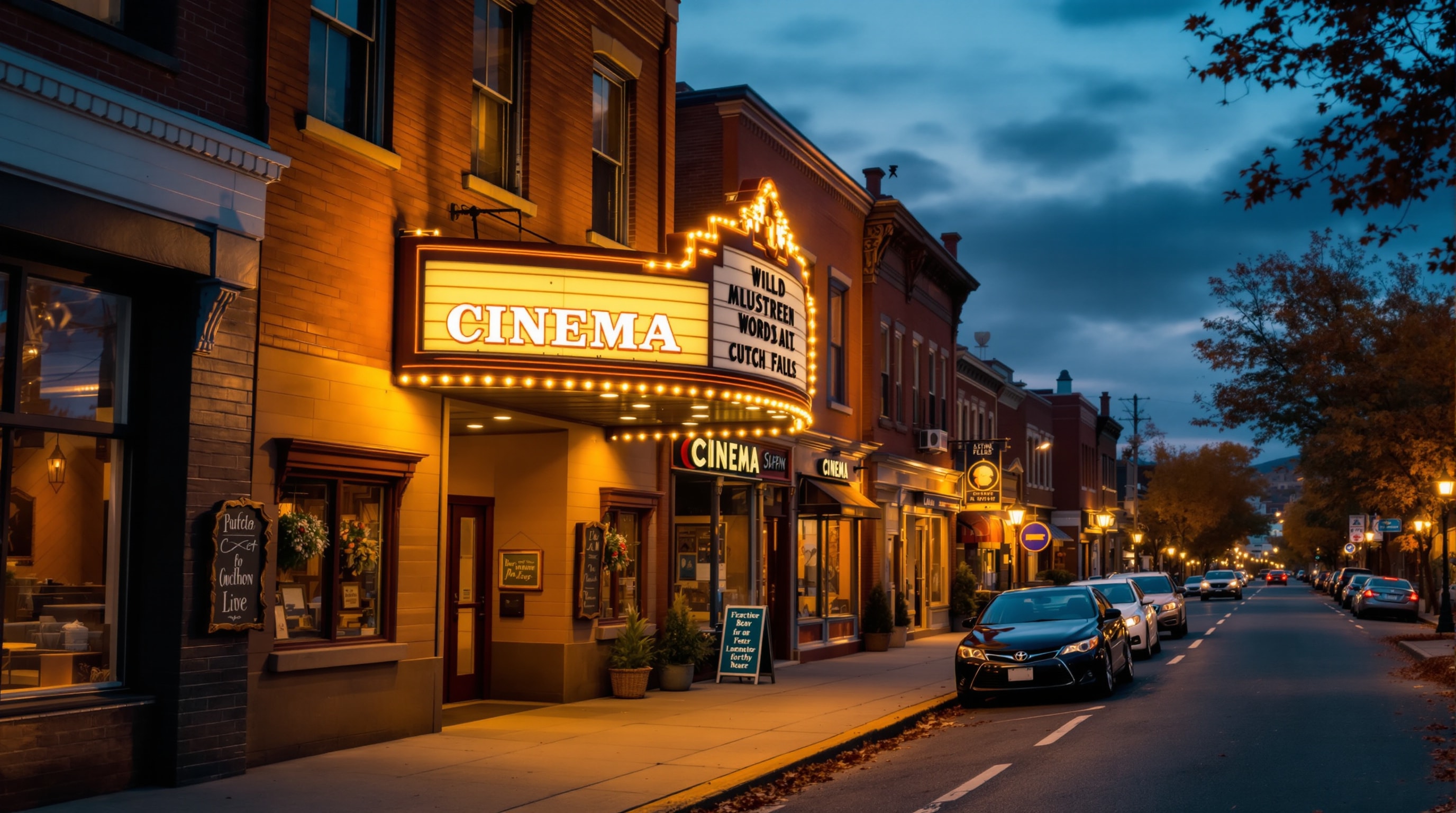
Why the Small-Town Movie Theater Matters
For most of the twentieth century, the movie theater was the beating heart of the American small town — the one place where the whole community gathered in the dark. The Clover was Cloverdale's, and its story is a window onto why these modest buildings carry so much weight.
The Only Theater for Miles
For much of its life the Clover held a distinction that says everything about small-town exhibition: it was the only movie theater between Santa Rosa and Ukiah, anchoring the entire north end of the county. For families in Cloverdale and the surrounding hills, "going to the movies" did not mean a choice among a dozen suburban screens. It meant the Clover, or a long drive, or nothing at all.
That kind of monopoly is not a business advantage so much as a civic responsibility. When a town has one theater, that theater is its cinema, its event space, its rainy-day refuge, and a piece of its identity. Its survival is everyone's business, which is exactly why the town rallied to fund the Clover's revival.
More Than a Business
A small-town theater does economic work that never shows up on its own ledger. A lit marquee keeps a downtown alive after dark; it sends people to the restaurant next door and the ice-cream shop across the street. It gives teenagers a place to be that isn't a parking lot. It gives a town a shared cultural calendar — a reason to leave the house and stand in line with neighbors.
The National Endowment for the Arts has long documented how cultural venues drive local economies and strengthen community ties, and few venues do it as efficiently as a downtown movie theater. The Clover was proof of concept: a single screen that, at its best, made a whole town feel more connected to itself.
The Hard Math of Survival
None of that civic value makes the economics easy. A small independent cinema runs on thin margins in the best of times, and the years after 2020 were not the best of times. Studios shortened the exclusive window theaters get before films reach streaming; audiences grew comfortable staying home; and the fixed costs of a large old building never let up. The Clover's closing in 2023 was not a failure of love — the town clearly loved it — but a failure of a math problem that has closed hundreds of small theaters across the country.
What a Town Loses
When a small-town theater goes dark, the loss is not only nostalgic. A downtown dims a little; a gathering place disappears; a piece of shared memory has nowhere to live. That is why communities fight so hard to save these buildings, and why groups like the National Trust for Historic Preservation treat neighborhood theaters as heritage worth defending. Even with the screen dark, the Clover's place in Cloverdale is remembered and, perhaps someday, reclaimed.